ISISLab

Seminario: “Combining Agent-based Model and Discrete Event Simulation: the approach of Hybrid Simulation Modeling” di Giuseppe D’Ambrosio

Abstract: Agent-Based Modeling (ABM) and Discrete Event Simulation (DES) are two of the most common simulation approaches, and are supported by many simulation tools. Recently, modelers have begun integrating these methods to simulate real-world situations which have some elements better represented by DES and others better represented by ABM. Hybrid ABM and DES simulation is […]
Hyperlinking Object-Oriented Discussion: A New Approach To Collaboration di Tiziano Citro

Abstract:Modern collaboration platforms have familiarized users with the benefits and capabilities of real-time communication. However, real-time communication can also introduce challenges in the form of a lack of context and limited control over discussed data. To address these issues, this work proposes a new collaborative approach called Hyperlinking Object-Oriented Discussion (HOOD), where discussed data is […]

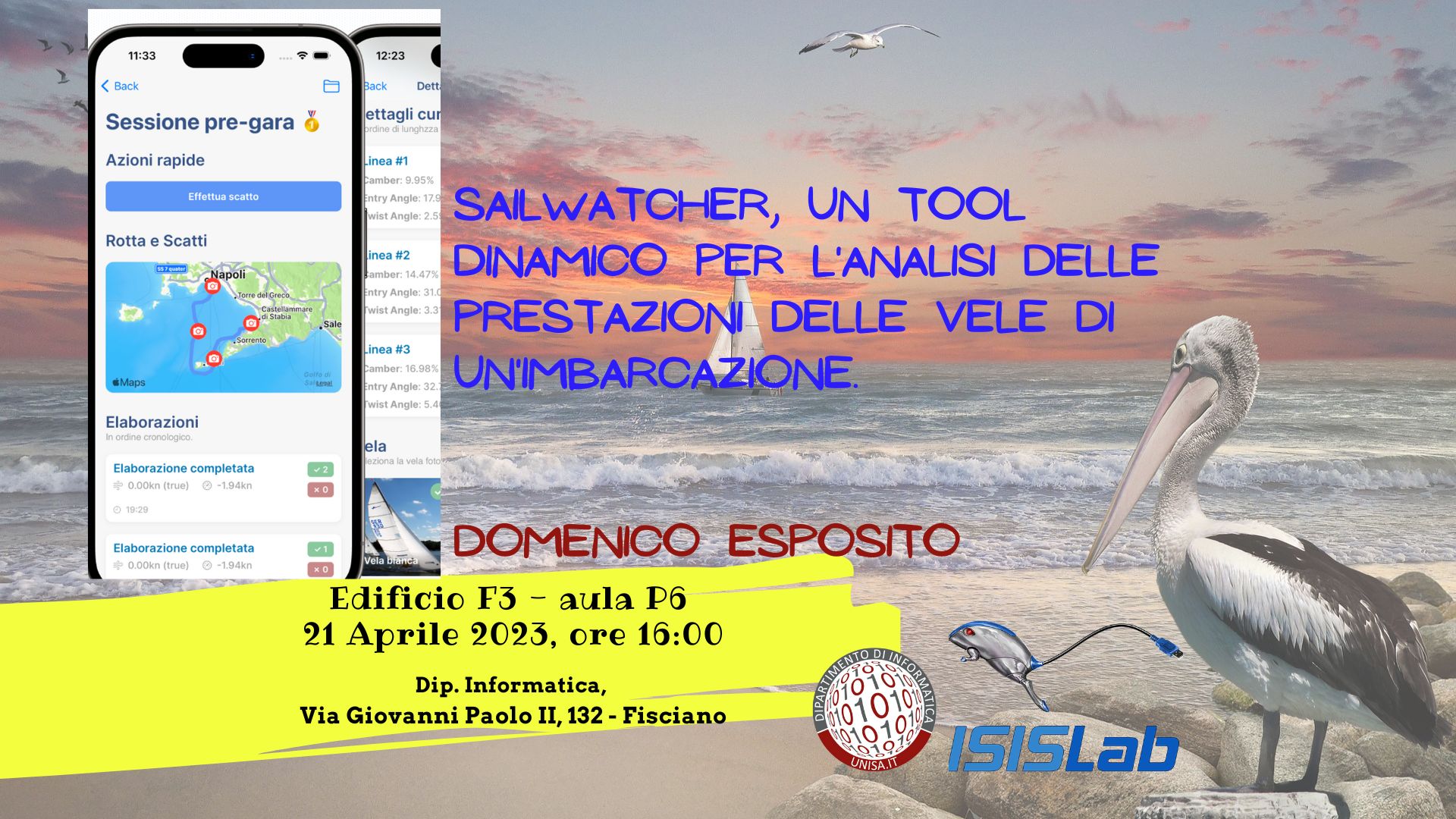
Seminari: SailWatcher, un tool dinamico per l’analisi delle prestazioni delle vele di un’imbarcazione di Domenico Esposito

Abstract: Secondo seminario su SailWatcher, un tool per smartphone, che senza l'ausilio di sensori esterni, permette in maniera automatica di recuperare i parametri sulle forme delle vele delle imbarcazioni. In questo seminario ci focalizzeremo sugli aggiornamenti della pipeline presentata qualche mese fa, sulla realizzazione dell'applicazione in Swift/SwiftUI e sulla parte di servizi web per la […]

Seminario:”Deep Generative Models for Graph Generation” di Valerio Di Pasquale

Abstract: Uno studio generale del problema della generazione dei grafi e dell’approccio al problema mediante tecniche basate su modelli di Deep Learning volto alla progettazione e alla implementazione di modelli utili alla ricostruzione di motif in Ipergrafi. Sarà approfondito l'uso di tre modelli utili in task di link prediction e di generazione nel contesto dei […]

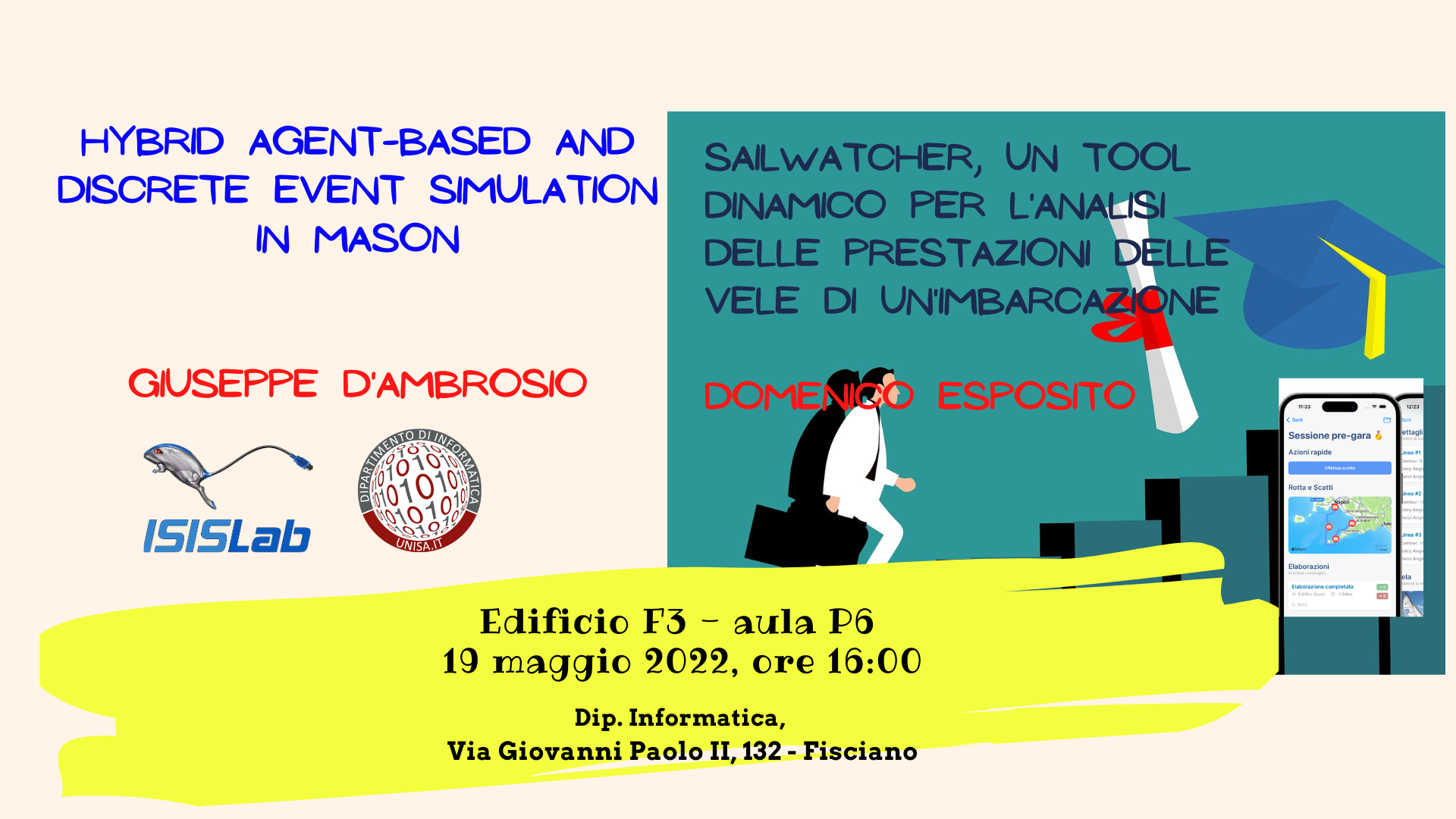
Seminari di Giuseppe d’ Ambrosio e Domenico Esposito

"SailWatcher, un tool dinamico per l'analisi delle prestazioni delle vele di un'imbarcazione" di Domenico Esposito Abstract Seminario breve su "SailWatcher": tool per smartphone, che senza l'ausilio di sensori esterni, permette in maniera automatica di recuperare i parametri sulle forme delle vele delle imbarcazioni. Durante il seminario verranno presentate le caratteristiche dell'algoritmo di computer vision progettato, […]

Seminar: “EMPI: Enhanced Message Passing Interface in Modern C++” of Majid Salimi Beni

Abstract:Message Passing Interface (MPI) is a well-known standard for programming distributed and HPC systems. While the community has been continuously improving MPI to address the requirements of next-generation architectures and applications, its interface has not substantially evolved. In fact, MPI only provides an interface to C and Fortran and does not support recent features of […]

Scalable Parallel Graph Algorithms – Prof. Sajal Das

ABSTRACT: Many real-world networks (e.g., wireless mobile networks, IoT and drone networks, disaster response networks, social and biological networks, transportation networks) are modeled as dynamic graphs characterized by their evolving nature, such as node/edge insertions and deletions, and edge weight modifications. Managing dynamic graph updates in parallel poses unique challenges. In this talk, we will […]

Integrazione di dati GIS in krABMaga di Christian Mascolo

Abstract: Studio inerente al Geographic information System(GIS), un sistema che integra operazioni DBMS ad operazioni cartografiche, mediante l'utilizzo di sistemi di disegno computerizzato, permettendo l'analisi completa di un'entità geografica. Verrà analizzato un plugin sviluppato in Rust, con analisi di alcune problematiche, e la sua potenziale integrazione con l'engine krABMaga

Seminario:”Towards a SYCL API for Approximate Computing” di Lorenzo Carpentieri

Abstract:Approximate computing exploits the gap between the accuracy provided by a system and the accuracy required by an application. Many applications such as image processing and neural networks, are tolerant of a certain amount of error, and have the potential for significant improvements in terms of execution time and energy consumption if a small amount […]